The innovative pilot tool approach powering SHL Medical’s production ramp-up
April 09 2026
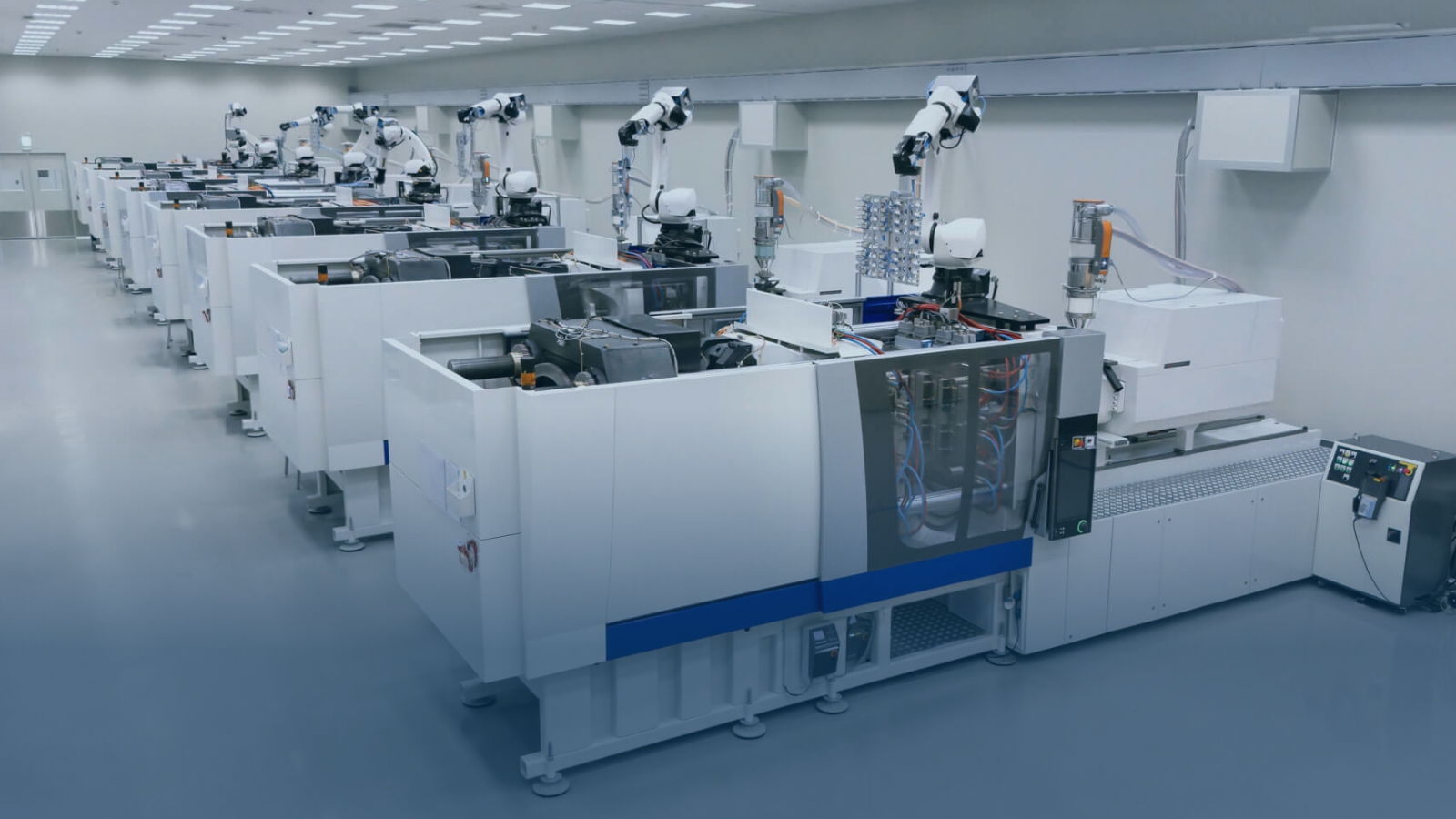
Advanced injection molding machines are used in medical device production ramp-up at SHL Medical’s sites.
Of the many factors during ramp-up that determine how quickly a medical device goes from design to production and then to meeting demand, the injection molding stage, particularly the number of cavities per mold, is one of the biggest. It is a challenge at the heart of medical device injection molding, and one that shapes both timelines and costs at scale.
A typical autoinjector has 15–20 components, each made on an injection molding machine (IMM) with anywhere from one to 64 cavities. Low-cavitation tools deliver less volume but are easier to design and tune. High-cavitation tools boost output and can shorten lead times, but they are harder to build and control, and quality risk rises with every cavity.

Figure 1: A closer look at low-cavitation tool and a high-cavitation tool.
Higher cavitation is key for a large-volume production run, but a 32-cavity tool is not the starting point. The product is usually developed using a one- or two-cavity tool. Intermediate tools then ease the transition to higher-cavity production tools. Each step up requires additional engineering, such as further tool structure design, flow balance, cooling optimization, and validation work.
Skipping the incremental steps can come with similar challenges.
“If a low-cavitation tool is not properly designed for scale-up, advancing directly to high cavitation forces major tool design changes, and that’s where costs and timelines blow out,” says Jim Hsieh, a senior molding process engineer at SHL Medical.
SHL Medical tackles the challenge differently.
|
|
In 2022, surging pandemic-induced demand left factories running up against the hard constraint of floor space, with no room available for additional toolsets. With scrap and cycle time already optimized, the tooling design and molding process development teams innovated the new pilot tool approach to allow more cavities to be produced with the same machines and without expanding their footprint. |
|
The pilot tool concept in autoinjector manufacturing
SHL Medical utilizes an innovative pilot tool approach that enables it to scale up from low to high cavitation in a single step. Going directly from, for example, eight cavities to 48 means high-volume manufacturing demands can be met on the same equipment footprint.
As Hsieh explains, the pilot tool precisely replicates high cavitation, so the tooling team can lock in structural design, hot runner layout, cooling design, and steel dimensions early on.
“After receiving a customer request, the team creates a 3D model and forecasts demand at one, five, and 10 years to define the target cavity count. That end goal then guides both tool architecture and process strategy from the outset.”
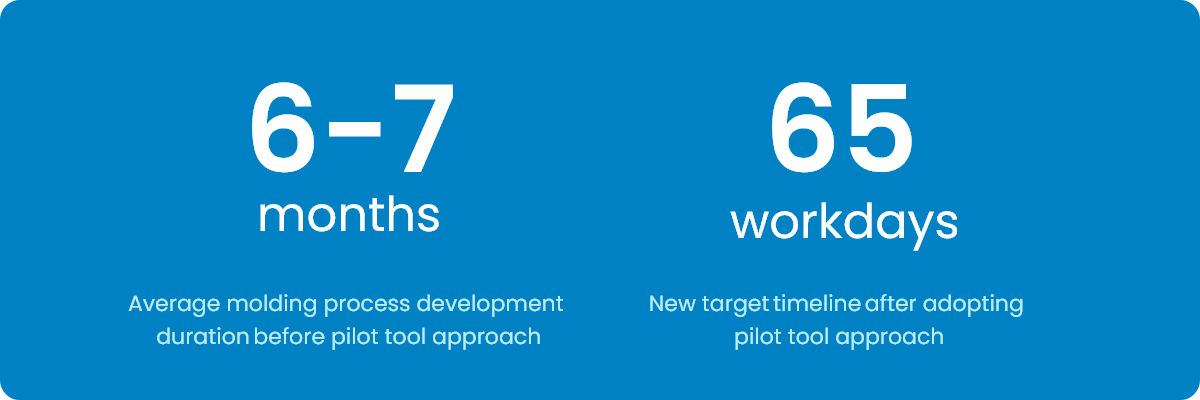
Figure 2: SHL Medical’s pilot tool approach cuts autoinjector manufacturing process development from 6-7 months to 65 workdays.
The result is less rework later. When moving to the high-cavitation tool, the foundational design does not need to be reworked, and resizing decisions are largely eliminated.
This also reduces costs by cutting down on the extra evaluations, discussions, and material necessary in iterative testing.
Scientific injection molding at the core
The pilot tool approach is made possible by SHL Medical’s rigorous scientific molding process development workflow.
As Hsieh puts it, “We systematically follow scientific injection molding—something that’s still not standard across the industry—to build a robust process that, once established, does not need ongoing modifications.”
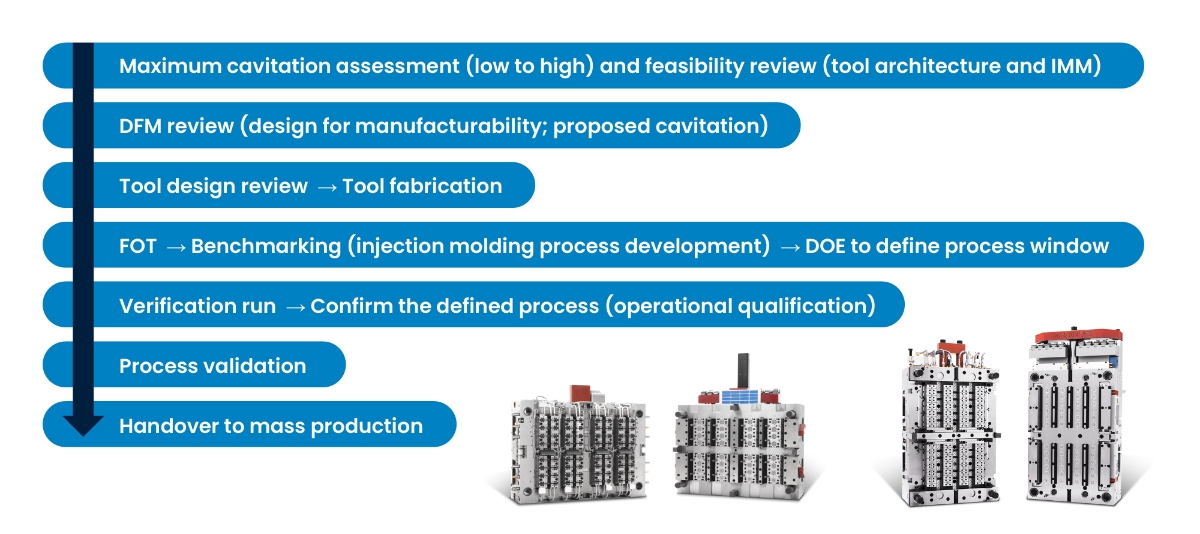
Figure 3: SHL Medical’s approach to scale-up and molding process development.
With an end cavity count in mind, SHL Medical runs a design for manufacturing (DFM) review cycle to confirm the cavitation is feasible given the tool design and molding platform.
After the tool has been designed and built, first-out-of-tool (FOT) trials ensure that the tools function as intended and consistently produce cosmetically acceptable parts before process development begins. Scientific injection molding (SIM) is then applied to drive cavity-to-cavity, shot-to-shot, and run-to-run consistency; if the dimensions fail to meet those requirements, steel is adjusted but the process is not.
Next, benchmarking establishes nominal settings and an initial set of 10 shots is measured to confirm cavity equivalence and short-term consistency. A structured design of experiments (DOE) varies key parameters to define a practical process window, followed by a verification run.
Finally, both single-cavity and cross-cavity process performance indices (Ppk) are evaluated, typically with targets of 1.67 and 1.33, respectively. This assessment ensures both shot-to-shot consistency and cavity-to-cavity uniformity, confirming that the process is sufficiently stable for mass production handover.
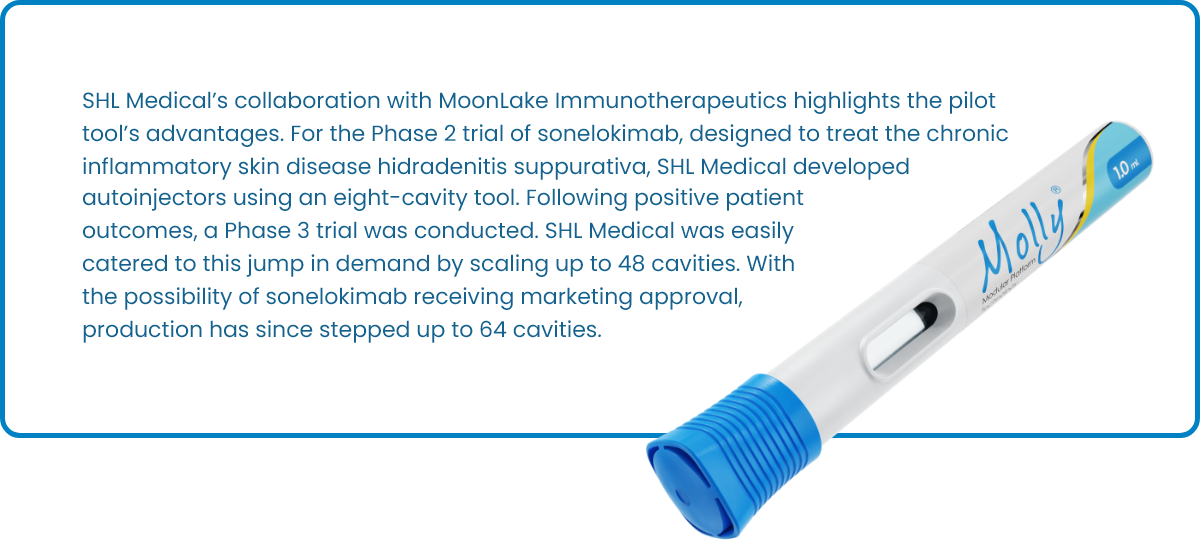
Figure 4: SHL Medical’s autoinjector manufacturing scaled from eight to 64 cavities to support MoonLake Immunotherapeutics’ sonelokimab from Phase 2 trials to market.
The supporting infrastructure
Because the pilot tool stage sets the baseline for everything that follows, SHL Medical prioritizes high-precision equipment and tooling capabilities that can hold exceptionally tight tolerances from the start.
“We rely on precision tools that hold exceptionally tight, repeatable tolerances,” Hsieh says. “When tooling is built with greater tolerance margins, as is often the case, this leads to more difficulties down the road when scaling up.”
Similarly, using higher-precision IMMs facilitates consistent output and process control, in turn supporting more stable, robust quality across long runs.
Capacity planning is also built in. When demand spikes, duplicate production tools can be built based on the proven design, adding parallel capacity with far less development effort than starting from scratch.
Further supporting SHL Medical’s ability to quickly ramp up production is its newly opened manufacturing facility in the US.
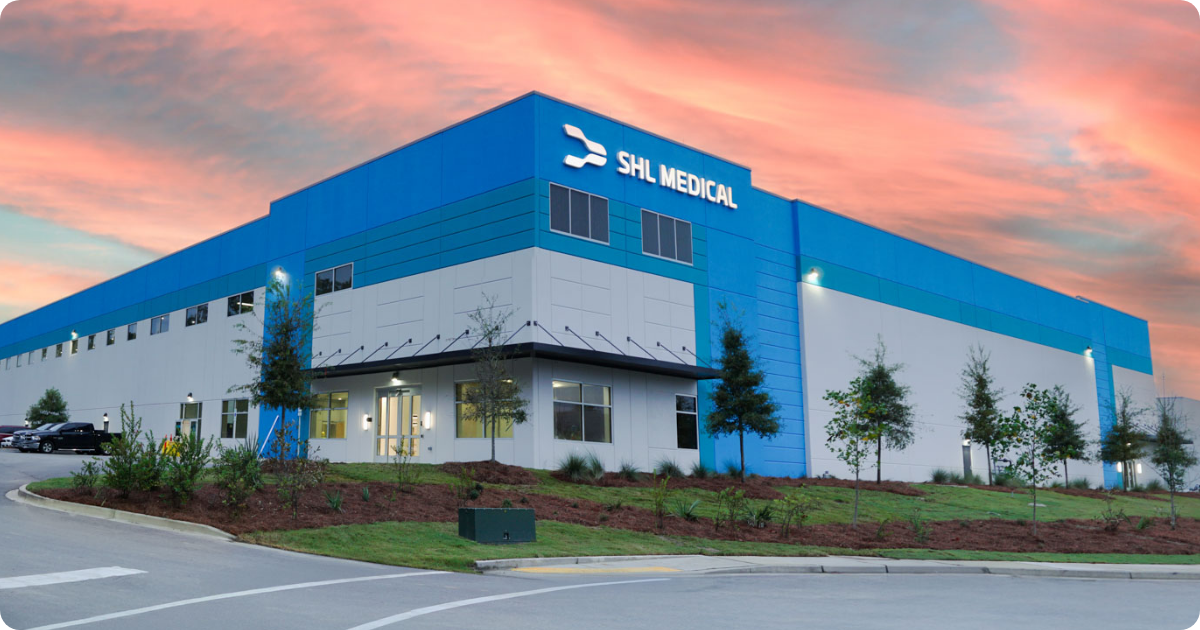
Figure 5: SHL Medical’s North Charleston site in South Carolina, USA.
Tooling developed in Taiwan is transferred to the North Charleston site and, after qualification and validation, put into operation. Production there is already underway, supporting fast-growing demand in North America.
Smooth transitions
By treating the pilot tool as a high-cavitation proxy, SHL Medical locks in tool design and a validated molding process. This unique approach ensures a smooth, single-step transition to the final tool, cutting late-stage redesigns, rework, and repeated sampling.
Rigorous DFM, SIM, DOE-defined process windows, and statistical process capability validation provide the backbone for this approach, delivering consistency that holds over long runs with millions of shots.
For a deep dive into the entire autoinjector development process, download SHL Medical’s “Autoinjector: From Planning to Launch” white paper here.