Navigating regulatory readiness in evolving landscapes: MIDBA and beyond
August 11 2026

|
|
MIDBA represents an important milestone in regulatory science because it recognizes that robust platform evidence can, under the right circumstances, support more efficient clinical development while maintaining confidence in product performance. For pharmaceutical companies, this shifts the conversation from simply selecting a delivery device to selecting a partner with the scientific evidence, platform experience, and regulatory expertise needed to support global submissions. James Haynes Regulatory Senior Director
|
|
As regulatory expectations for drug-device combination products continue to evolve, pharmaceutical companies increasingly rely on device partners that offer not only proven drug delivery technologies but also the scientific evidence and regulatory expertise needed to support global submissions.
This growing emphasis on platform evidence is reflected in the European Medicines Agency’s (EMA) March 2026 qualified opinion on the Molecule-Independent Device Bridging Approach (MIDBA). While MIDBA has the potential to streamline development for certain drug-device combination products, it also signals a broader shift in regulatory thinking: under clearly defined conditions, accumulated platform knowledge can support regulatory decision-making while enabling more efficient clinical development approaches.
Understanding MIDBA
Traditionally, pharmaceutical companies developing an autoinjector presentation for an approved or late-stage biologic conduct a dedicated pharmacokinetic (PK) bridging study to demonstrate comparable drug exposure between a manual pre-filled syringe (PFS) and an autoinjector.
For the European market, MIDBA introduces an alternative scientific methodology. Under defined conditions, sponsors may be able to leverage existing PK comparability data generated across previously studied monoclonal antibodies rather than conducting a new bridging study for every molecule.
This approach reflects growing consensus that, for many subcutaneously administered monoclonal antibodies, absorption is governed primarily by lymphatic uptake rather than injection mechanics. When product and device characteristics remain comparable, exclusion of molecule-specific bridging activities may be justifiable in the eyes of EMA.
MIDBA in a nutshell
Watch our explainer video, narrated by our Global Regulatory Senior Director Viky Verna, and understand how MIDBA can streamline development for monoclonal antibodies by leveraging existing pharmacokinetic comparability data under defined conditions.
Why platform evidence matters
MIDBA represents more than an opportunity to leverage existing platform device data. It reflects a growing recognition in regulatory science, where accumulated evidence generated through well-characterized delivery platforms is increasingly recognized as a valuable scientific asset.
For pharmaceutical companies, this can have practical benefits, including shorter development timelines, reduced clinical development costs, and simplified lifecycle management when introducing autoinjector presentations in Europe. These efficiencies become even more valuable for organizations developing multiple biologics with similar characteristics, where knowledge generated through one program may support future assets within the portfolio.
However, MIDBA is not a blanket exemption from PK bridging studies. It applies only when clearly defined product and device criteria are met. The same monoclonal antibody, formulation, dose, and injection volume must be used in both the PFS and autoinjector presentations, and the molecule must fall within the scientific boundaries of the qualified methodology.
The device must also operate within the design space evaluated by the EMA, including characteristics such as an exposed needle length of 4–8 mm, an injection volume of 0.5–2 mL, and use of the same injection site or sites as the corresponding PFS presentation. These criteria help ensure that the assumptions underlying the PK comparability framework remain scientifically valid.
For pharmaceutical companies, realizing the potential efficiencies of MIDBA depends not only on the molecule, but also on selecting a delivery platform supported by robust engineering characterization, accumulated evidence, and experience across global regulatory submissions.
Regulatory expertise turns evidence into strategy
For products eligible for MIDBA, meeting its technical criteria is still just one step of development. Successfully applying the methodology requires the ability to integrate device performance, clinical, and human factors evidence into a scientifically justified regulatory strategy. This is where an experienced device partner provides value, combining a well-characterized platform with regulatory insight and the expertise needed to translate evidence into a clear pathway for global submissions.
|
|
SHL Medical’s Regulatory Senior Director, James Haynes, explains: “The establishment of MIDBA represents an exciting opportunity to support more efficient combination product development while maintaining the scientific rigor expected by EMA. Our experience supporting nearly 120 active products and more than 90 global submissions has provided valuable insight into the evidence, documentation, and regulatory considerations needed to successfully advance drug-device combination products across global markets.”
|
|
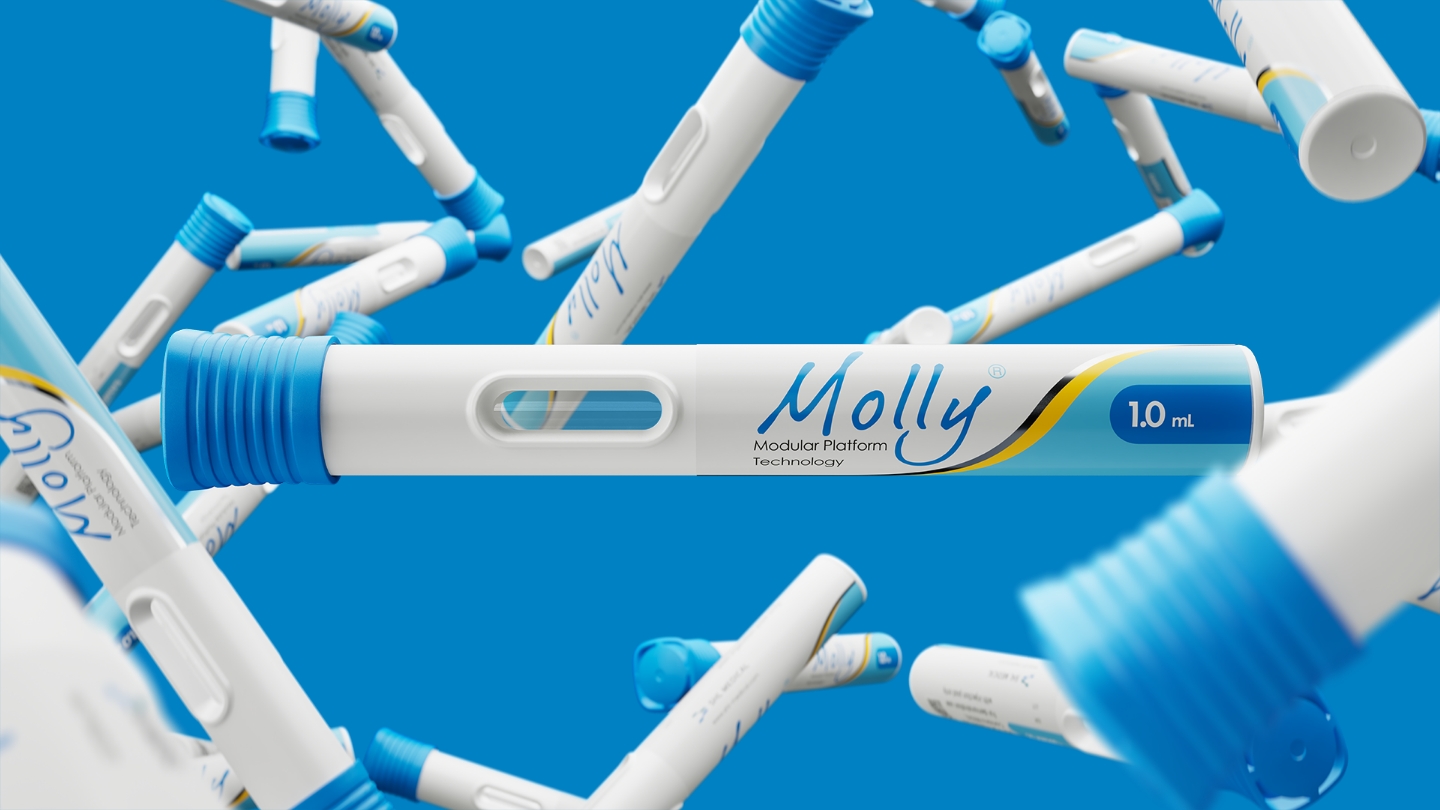
SHL Medical’s Molly autoinjector platform, first commercialized in 2016, was developed with a platform perspective long before the emergence of the MIDBA methodology. In fact, its prevalence in the market meant that several of the bridging success stories underlying MIDBA’s scientific foundation were performed with molecules in Molly devices. In supporting those and other successful programs, SHL Medical has developed deep in-house regulatory expertise. Our regulatory leaders routinely collaborate with pharmaceutical companies to evaluate emerging pathways such as MIDBA, identify potential evidence gaps early, and develop science-based strategies aligned with global regulatory expectations.
Navigating the Evolving Regulatory Landscape
While MIDBA offers a promising pathway for eligible combination products, it is only one of several regulatory strategies available to pharmaceutical companies. Having supported the commercialization of more than 70 drug-device combination products across 75+ markets, SHL Medical brings one of the industry's broadest bodies of experience in combination product development and regulatory strategy. Whether leveraging MIDBA, pursuing molecule-specific bridging studies, or applying other evidence-based submission approaches, SHL Medical helps pharmaceutical partners identify the pathway best suited to each program, enabling efficient and tailored global launch strategies.

If you're developing a biologic and want to understand how the MIDBA approach could apply to your combination product, contact our Global Regulatory Team, at [email protected] to identify opportunities to streamline development and reduce regulatory burden through platform evidence.