How user-centered autoinjector design supports a more comfortable, confident user experience
June 10 2026
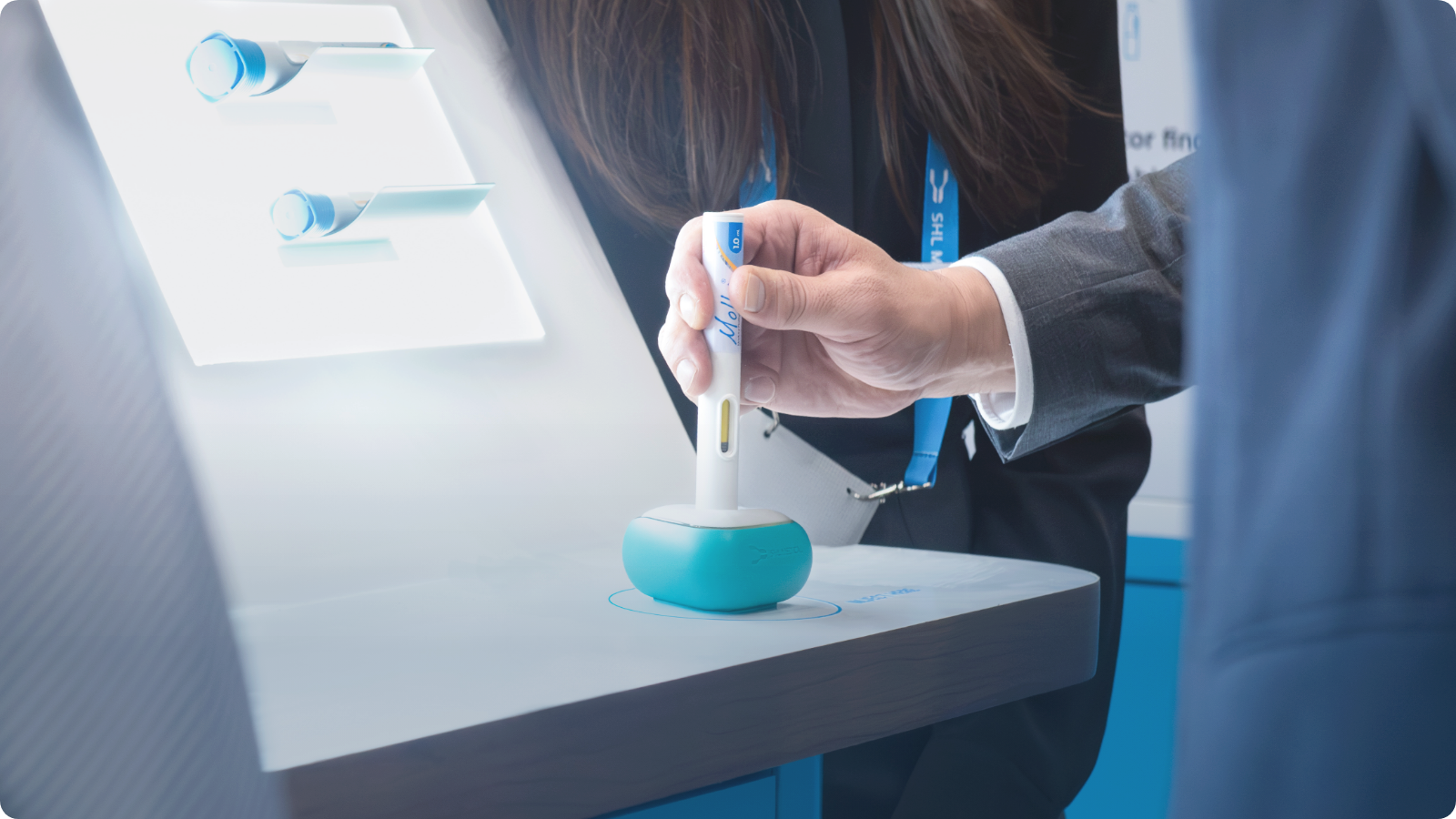
A patient with multiple sclerosis sits at their kitchen table, preparing to self-administer an autoinjector for the first time. As they remove the device from its packaging, many factors will determine not only whether the dose is delivered safely, but whether the experience supports the patient in continuing treatment over time.
While the efficacy and side effects of the drug itself play an outsized role here, the usability of the device is also critical. If using a self-injection device is difficult, confusing, or physically unpleasant, treatment adherence may suffer.
Usability engineering in autoinjectors
At its core, usability engineering examines how people perceive information, make decisions, and act when interacting with products in real-world conditions. Its primary focus is the user, their abilities, limitations, expectations, and behaviors across the complete use lifecycle.
Usability engineering systematically identifies and assesses use-related risks by analyzing how design features, user interfaces, and instructions influence user behavior, and by ensuring that user needs and safety considerations are effectively addressed through design.
User behavior is influenced not only by the device, but also by the environment in which self-injection takes place. Factors such as lighting, noise, temperature, and distractions affect sensory perception, cognitive load, and physical capability. In turn, these factors influence how information is understood, how instructions are followed, and how reliably actions are performed.
In the context of autoinjectors, some use-related risks are obvious, such as accidental injury caused by confusing instructions or packaging. Other risks are less apparent, such as a user applying incorrect assumptions based on prior experience with a different autoinjector. These errors can occur in any setting, but are more likely in stressful or constrained use environments, where users may rely on habit rather than deliberate reasoning.
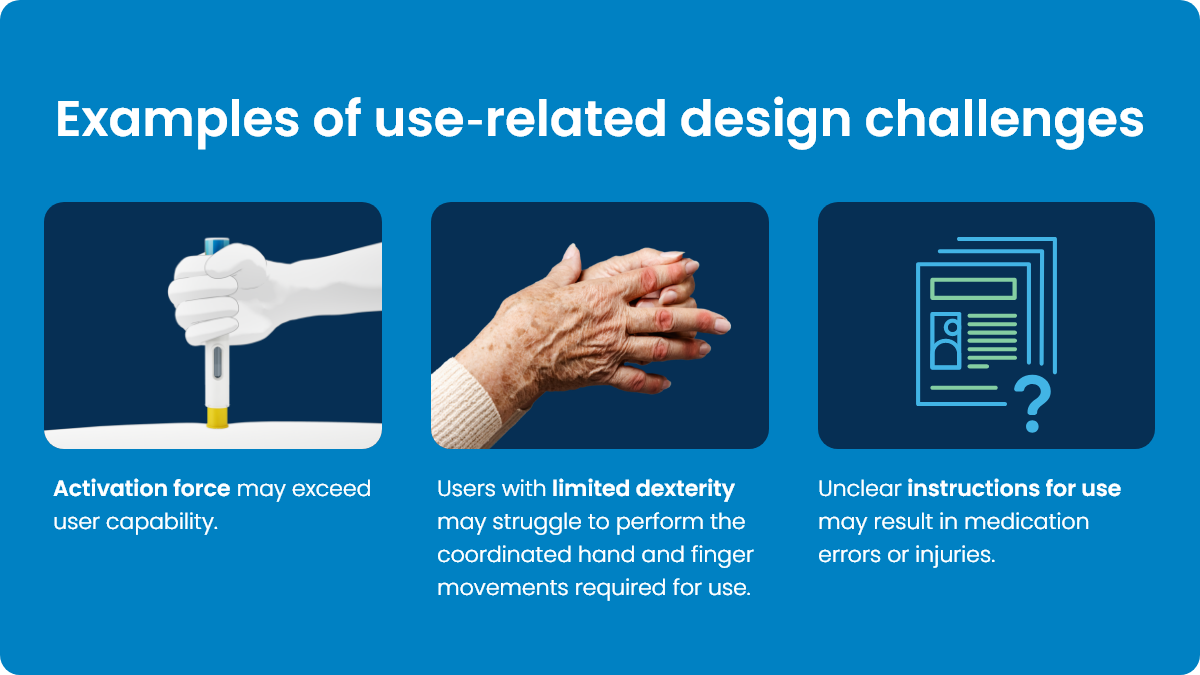
Usability engineering also helps generate the evidence needed for regulatory approval. Health authorities closely scrutinize new combination products, requiring proof not only that the medication performs as intended, but that the device can be used safely and effectively by the intended population.
An end-to-end process across the development cycle
Far from being a single late-stage test, usability engineering runs throughout the entire autoinjector development and design cycle.
“We start analyzing use-related risks very early in our process,” says Nenad Suknovic, SHL Medical’s Senior Research Lead of Usability Engineering. This use-related risk analysis (URRA) catalogs foreseeable risks by drawing on public research into similar devices, known use problems, and documentation from newly conducted usability evaluations.

As the device concept progresses, user interfaces are designed and refined through multiple iterative cycles with end users. Industrial designers shape the physical and visual aspects of the interface, while early device prototypes are developed and used in ongoing usability evaluations as early as feasible. These iterative refinements help identify where the interface supports intended use, where users may struggle, and where further optimization is needed.
Also called formative studies, these simulated-use evaluations are conducted with groups of five to eight participants. Users are observed for use errors, use difficulties, and close calls, which are subsequently analyzed to identify the underlying root causes. Three rounds of formative testing are considered the gold standard.
As the commercial design is finalized, the work shifts into human factors validation testing. This simulated-use study is conducted with representative users and a product as close to market-ready as possible, including the device, instructions, labeling, and packaging.
“Summative tests represent a substantial investment, and costs can run well into six figures,” Suknovic says, underscoring the need to resolve major usability issues beforehand, as any serious findings at this stage can trigger costly redesigns and retesting.
With strict regulations and standards already setting a common baseline for safety and effectiveness, the challenge for manufacturers and their pharma partners becomes finding where meaningful improvements can still be made beyond minimum usability engineering to increase treatment adherence and support the self-injection experience.
Designing for comfort and confidence
SHL Medical is addressing this challenge by giving greater weight to the user experience.
“Our studies aim to uncover two very different things: what users can do and what users feel comfortable doing,” Suknovic says.
SHL Medical adopts a user-centered design framework that looks beyond whether a task is safe and possible for a user. This approach aims to uncover the hidden complexities that can make autoinjector use seem difficult, uncomfortable, or even unsafe — and that may ultimately determine whether a patient sticks with treatment.
For cap-removal force, for example, SHL Medical studies both the minimum and maximum force users can physically exert as well as what level is comfortable for them. These findings translate into devices that are intuitive and reassuring rather than merely functional.
Another example is in obesity treatment, where patients often begin treatment with firmer skin. SHL Medical studies have found that, since weight loss typically progresses faster than skin retracts, skin can become substantially softer. Given that skin firmness affects how injections feel, including how much resistance users perceive, this insight has become an important consideration in the company’s autoinjector designs for obesity treatments.
|
|
A recent study by SHL Medical highlights how early user experience research can guide user-centric device design. 30 participants with a BMI above 30 carried out simulated self-injections using three dummy Molly devices with high, medium, and low activation forces. While the low-force variant was rated highest for comfort, the medium-force version ranked the highest in both safety and activation force preference, making it the optimal choice for usability and patient confidence. |
|
Understanding the real user experience
From early risk assessment and formative testing to validation, usability engineering helps shape the entire autoinjector development and design processes. Yet as SHL Medical is demonstrating, there is still room to move beyond the minimum effort of usability engineering and give greater attention to the subjective experience of users.
By better understanding the realities of self-injection in everyday life, medical device manufacturers and their pharma partners can address the less visible factors influencing treatment adherence and success.
For pharmaceutical companies developing self-administered injectable therapies, these insights can support more informed discussions around device design, comfort, and usability. To learn more about SHL Medical’s user experience research for autoinjectors, or to explore how usability studies could inform your device program, please contact our team.
Please note: References to SHL Medical studies are based on simulated-use evaluations conducted to inform device design and development. User experience, treatment adherence, and treatment outcomes may vary depending on the therapy, patient population, device configuration, and use environment.