What 20 years of DAI say about keeping device technology relevant
September 30 2026
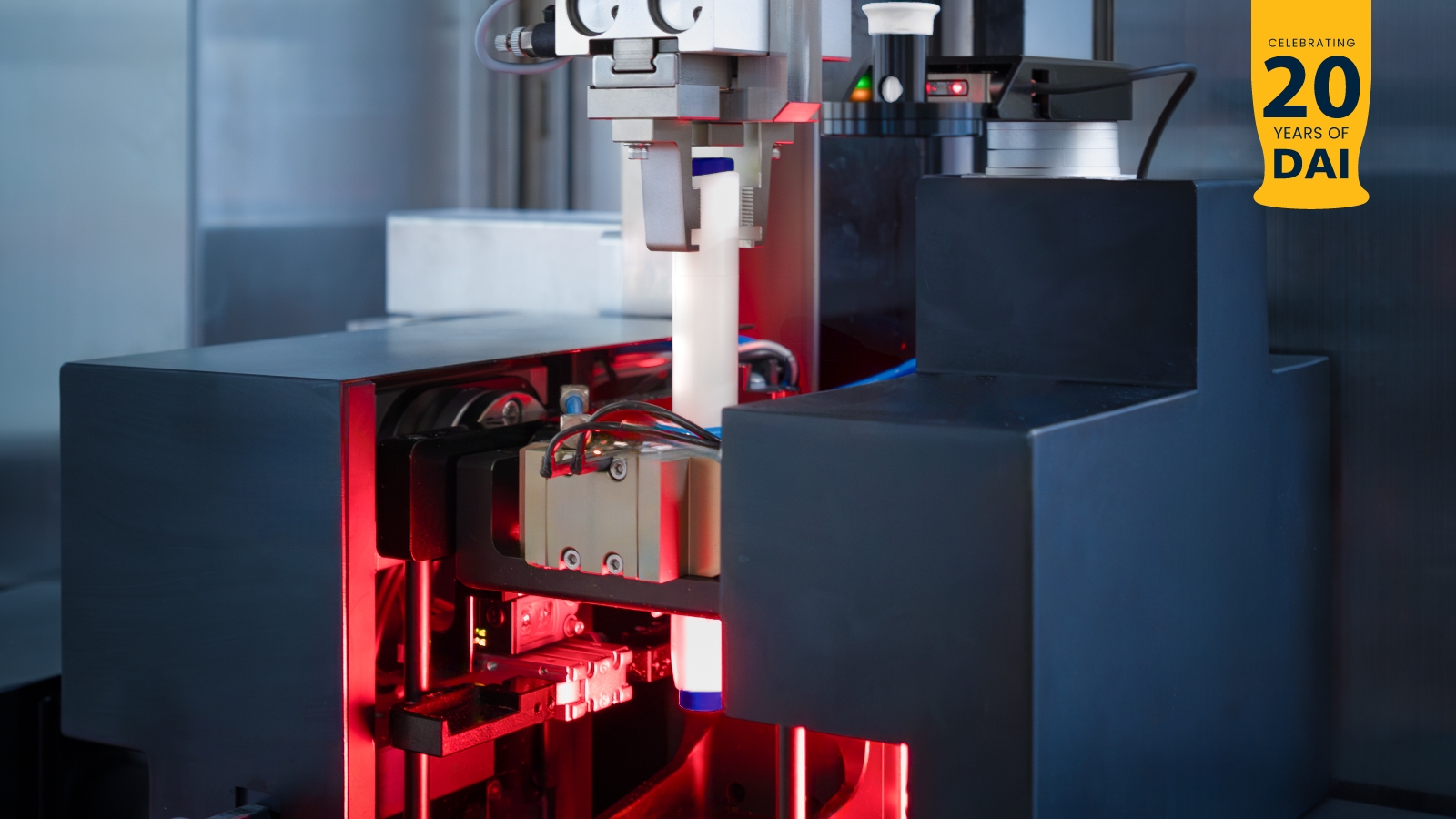
When DAI first reached the market 20 years ago, injecting a biologic at home was still a relatively new idea. SHL Medical’s DAI (Disposable Autoinjector) was among the early autoinjectors built for self-administration outside a clinical setting. Two decades on, it is still in commercial use with a new combination product approved as recently as 2023.
A 2024 review in the Journal of Pharmaceutical Sciences counted 98 biologic-device combination products approved in the US between 2000 and 2023, with pre-filled syringes and autoinjectors among the most widely used formats as home and self-administration spread.1 DAI was in production for almost all of that period.
What DAI’s two decades show is less about the device’s longevity alone than about what SHL Medical learned to build, adapt, and reproduce at scale.
Getting the autoinjector design to work
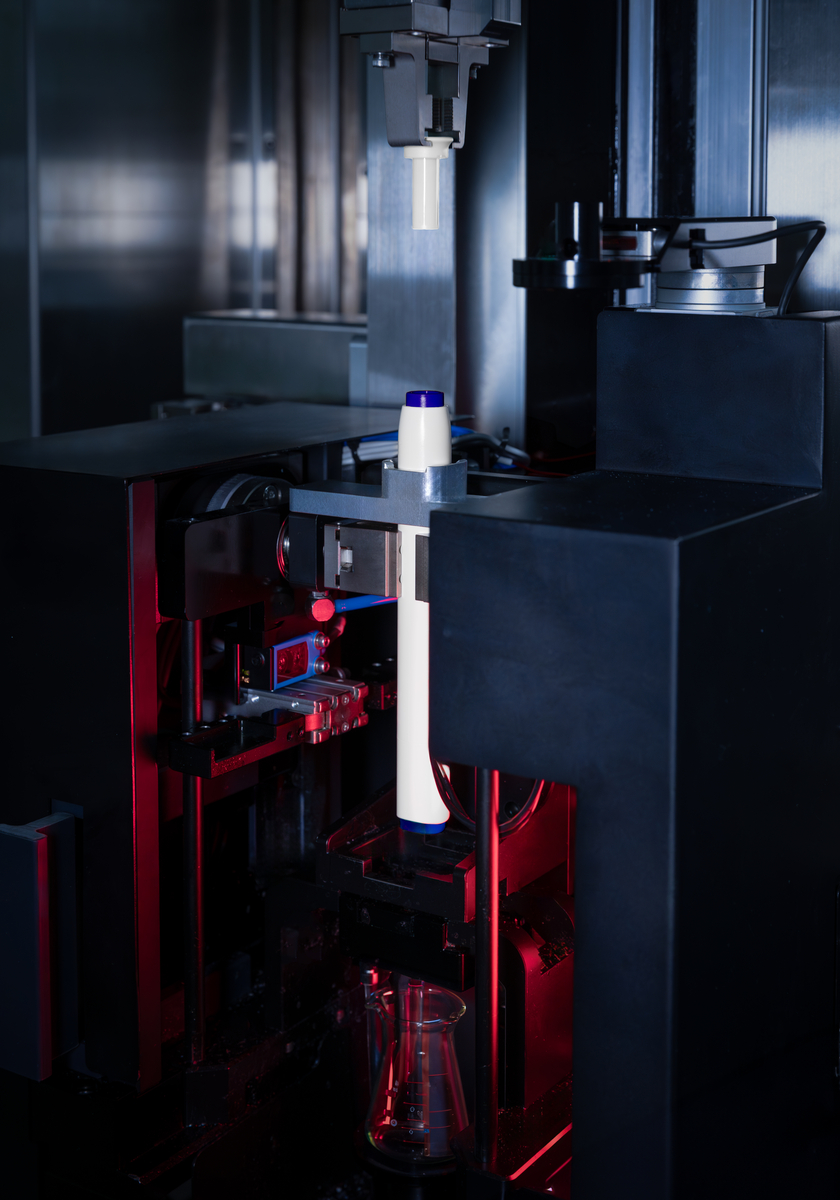
DAI’s mechanism relies on a pre-compressed spring holding its force until the moment of activation. Everything depends on controlling how the spring releases its energy, and on that release being consistent, unit after unit, at volumes reaching hundreds of millions. That consistency is the real engineering in an autoinjector device that looks straightforward in the hand.
Getting there took some effort. In its first few years, before it reached a commercial standard, DAI’s design was reworked more than once. Buttons activated too soon. Air appeared where it should not. Confirming the mechanics called for its own solution.
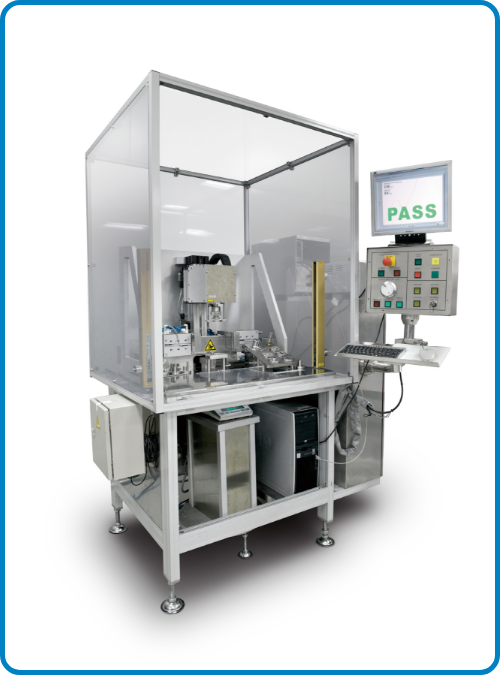
With no established way to verify the mechanics of every unit at the volumes required by the pharma partner, SHL Medical developed a purpose-built machine to test each DAI device before it reached the filling line. By the time DAI was first commercialized, the mechanism worked as intended.
For a pharma company, an autoinjector proven reliable to that degree is one less source of risk to manage across a product’s commercial life.
One autoinjector mechanism for many requirements
The clearest measure of DAI’s engineering is how far it stretched across 20 years. As new programs brought new requirements, DAI went through multiple reconfigurations to meet them, while the core mechanism stayed intact.
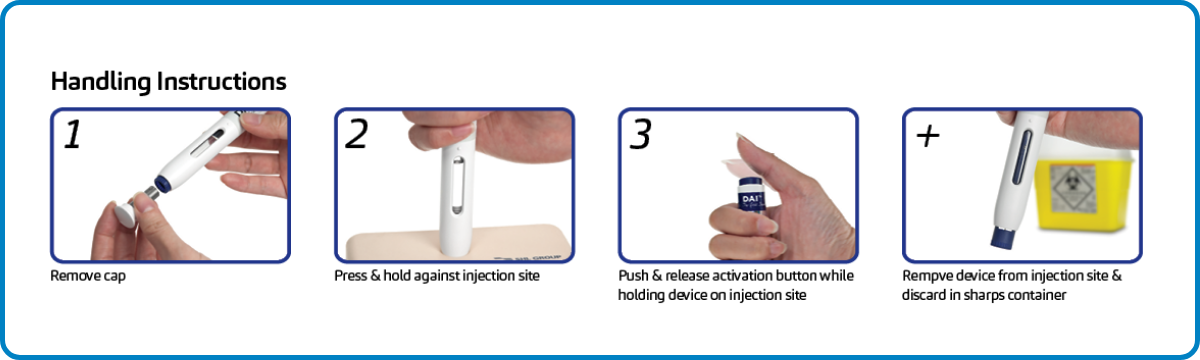
The earliest version required patients to follow a specific activation sequence by first pushing the device against the skin and then pressing the activation knob. Usability feedback later helped inform a later variant in which, once the cap was removed, the order of those actions no longer mattered.
For patients with reduced grip strength, one DAI variant removed the button and used a customized shell shaped for easier handling. A further variant was developed for intramuscular injections, with a retractable shield in place of a separate needle cover.
Each version met a different need across a wide range of therapies and together they show how SHL Medical can bring a proven starting point to a new autoinjector development program. For pharma teams, that can mean fewer unknowns being carried into tech transfer and scale-up.
What carries forward for autoinjector production
Today, DAI has accounted for close to one-third of global addressable autoinjector sales across 20 combination products, according to SHL Medical’s internal market analysis. The engineering behind DAI, and the discipline of holding it to a consistent standard across more than 880 million units, carried into the autoinjectors SHL Medical has developed since.
Among them is the Molly autoinjector, which marked its own tenth year in commercial use this year.
DAI’s history is less a product to adopt than a measure of what SHL Medical has learned to build and can build again. It shows how autoinjector manufacturing depends not only on the device concept, but also on the production discipline, testing capability, and lifecycle experience needed to keep a technology relevant across successive programs.
For pharma teams deciding where to place a molecule, that is a conversation worth having with SHL Medical’s team.
Next in the series: 20 years of manufacturing growth, on how one device shaped the in-house production capability behind it.
If you missed it, the first series looked at the pharma partnership DAI was built on and what it says about choosing a device partner.
Reference:
-
Guo, J., Weng, J., Zhu, Q., Zhou, F., Chen, Q., Gu, X., & Zhou, W. (2024). A review of recent FDA-approved biologic-device combination products. Journal of Pharmaceutical Sciences, 113(4), 866–879. https://doi.org/10.1016/j.xphs.2023.12.022
SHL Medical, DAI, Molly, and other SHL Medical names, logos and product names referenced herein are registered and/or non-registered trademarks of SHL Medical AG or its affiliates.