What 20 years of DAI built on the factory floor
September 30 2026
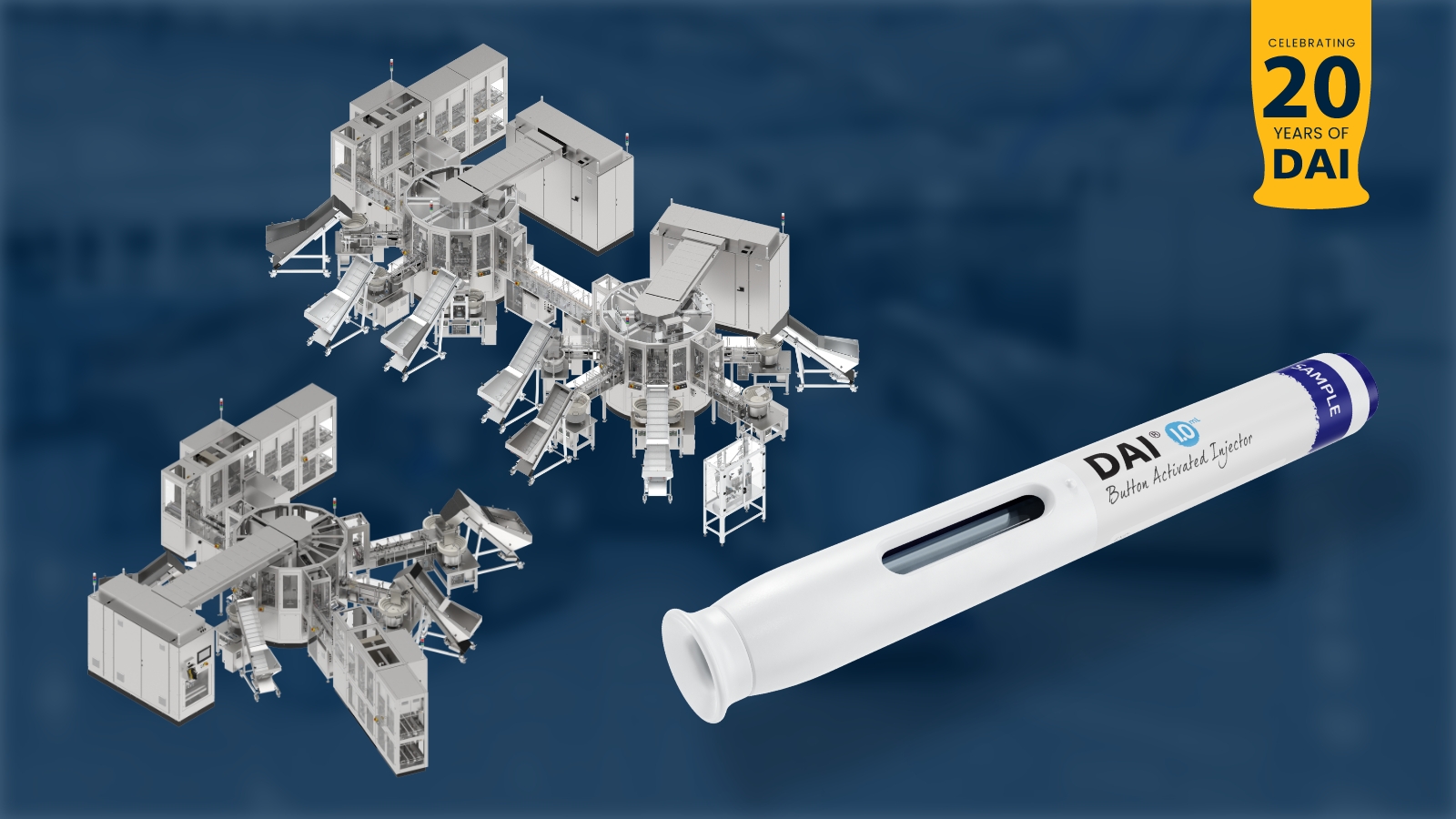
Commercial success creates a manufacturing challenge of its own. Volumes grow, forecasts change, and new combination product programs may bring additional requirements. As one device becomes a family of combination products, every difference in components, tooling, assembly processes, and controls has the potential to add another layer of complexity.
SHL Medical’s DAI (Disposable Autoinjector) offers a useful example of what happens next. First commercialized two decades ago, DAI has since supported around 20 combination products, with more than 880 million units shipped worldwide. Its production now spans Taiwan and the US.
The manufacturing system behind those numbers, however, looks very different from the one DAI started 20 years ago.
From manufacturing a device to building the capability behind it
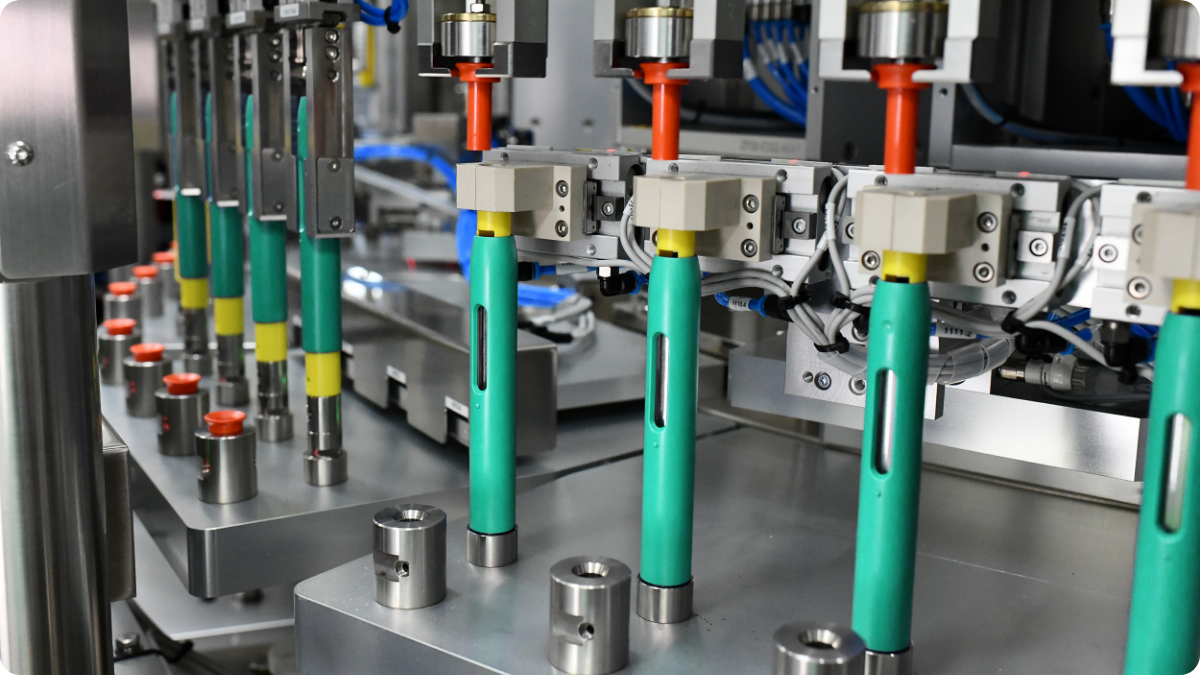
Early DAI production relied on manual assembly. As demand grew, production moved toward higher-capacity automation and demanded tighter control over the processes and equipment behind the device.
That growth coincided with SHL Medical bringing more manufacturing capabilities in-house. Automation and assembly capabilities were established early in DAI’s commercial development, followed by expanded tooling capabilities as production requirements grew. The tooling and automation expertise developed through this period later became SHL Advantec, helping establish the in-house equipment-building capability that supports SHL Medical’s manufacturing operations today.
Over time, toolmaking, molding, assembly, testing, and manufacturing automation became increasingly connected. For SHL Medical, that integration changes what can be addressed during scale-up. A molded component can now be considered alongside the tooling that produces it, the assembly process it will enter, and the equipment that will ultimately need to run it at commercial volumes.
Today, that approach is reflected in SHL Medical’s wider end-to-end production model, which integrates in-house tooling and molding with manual, semi-automatic, and fully automated assembly solutions designed around different product and production requirements.
When more volume also means more complexity
As DAI expanded, the manufacturing question eventually became bigger than how to produce more units.
Successive projects had created a broader family of DAI-based combination products. Each brought its own combination of device design, materials, manufacturing processes, equipment, and controls.
As more DAI-based combination products entered commercial production, SHL Medical and one of our longstanding pharma partners began looking across five projects collectively to identify where manufacturing capabilities and processes could be shared while preserving the requirements specific to each product.
The work included design-for-manufacturability and assembly assessments to examine where designs could be better suited for automated production. Existing variables and process controls were evaluated across the portfolio. Where commonality made sense, production could be brought into a more centralized manufacturing flow while retaining the product differences that still mattered.
The result was not simply more automation, but a more scalable way of managing a growing portfolio: identifying where variation remained necessary and where greater commonality could be introduced across autoinjector production.
A device program that succeeds commercially may eventually need much more than additional machine capacity. Its manufacturing model needs to accommodate growth while continuing to manage the differences that accumulate across products, markets, and years of production. Managing that complexity as volumes grow can also help control cost and support supply continuity over the commercial life of a product.
Making manufacturing capability transferable
For DAI, scale came to mean more than adding capacity in one place. It also meant holding the same capability steady as production expanded beyond Taiwan.
The device is now produced in both Taiwan and the US, with SHL Medical’s North Charleston site extending advanced molding and automated assembly capabilities into a second major manufacturing geography. The automated assembly equipment supporting DAI production there draws on systems refined through SHL Advantec and manufacturing know-how built in Taiwan.
Moving production across sites involves more than installing another assembly line. Processes, controls, equipment knowledge, and years of manufacturing experience also have to travel with it.
DAI therefore adds another dimension to what manufacturing scale can mean. It is not only the ability to produce more devices in one location, but also the ability to establish the manufacturing system elsewhere and maintain a common way of working across sites.
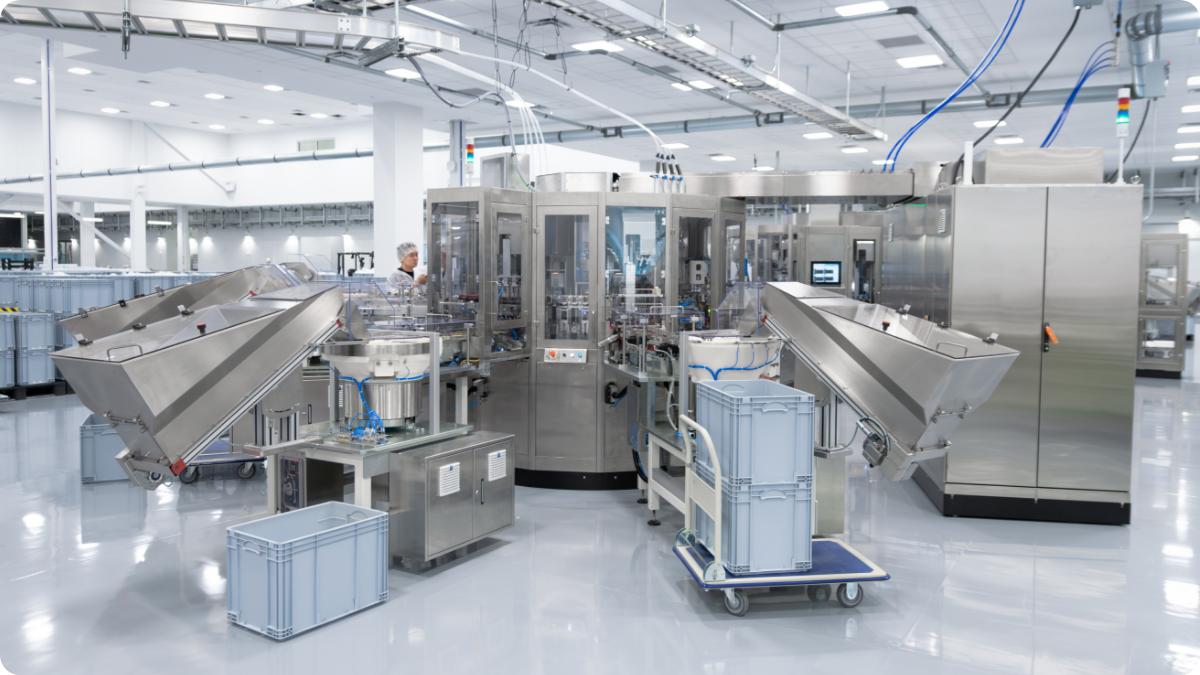
And that global manufacturing footprint continues to grow. With SHL Medical’s new site underway in Zug, Switzerland, we are adding a European hub that will support solutions including DAI, further extending our manufacturing presence across three continents.
As that manufacturing footprint expands, the challenge also moves beyond transferring capability between individual sites to planning and optimizing a wider production network. Smart manufacturing capabilities such as plant simulation, for example, allow us to model production processes, material flows, and automated equipment virtually, helping assess capacity and manufacturing setups before they are implemented physically.
What 20 years of manufacturing proves
More than 880 million units provide one measure of DAI’s manufacturing scale. The changes behind those units provide another.
Over the last two decades, DAI moved from manual assembly to automated production, from individual programs to a more consolidated manufacturing approach, and from production in Taiwan to manufacturing across two continents.
Along the way, the requirements surrounding the device helped shape capabilities in tooling, molding, automation, process engineering, and cross-site manufacturing that now extend beyond DAI itself.
That is what makes the manufacturing side of DAI commercially relevant 20 years later. For pharma teams evaluating a device partner, current capacity is only part of the question. The longer-term consideration is whether the manufacturing behind a device can keep that device in reliable supply as requirements, volumes, and complexity change across a product’s commercial life.
DAI gives SHL Medical two decades of experience doing exactly that.
To discuss the scale-up and manufacturing requirements behind your combination product program, get in touch with SHL Medical’s team.
Next in the series: 20 years of shared expertise, looking at what repeated commercial programs leave behind and how that accumulated experience continues to shape SHL Medical today.
If you missed it, the previous article looked at what DAI’s engineering history tells us about proven device technology.
SHL Medical, DAI, SHL Advantec, and other SHL Medical names, logos and product names referenced herein are registered and/or non-registered trademarks of SHL Medical AG or its affiliates.